The Best Time for a Cefalù Boat Tour
Sea temperatures, wind, crowds and sunset times month by month — and why the best month for swimming is not the best month for the water being clear.
September, if you are choosing on the water rather than on the calendar. The sea off Cefalù is 25°C — within two degrees of its August peak — the light is better, the bays are emptier, and the boats are not fully booked a fortnight out.
August has the warmest sea at 27°C and the calmest air of the year, and it also has every other visitor in Sicily. June and early October both work. And the thing that most affects a given day has nothing to do with the month: on a north-facing coast, a northerly wind decides whether you sail at all.
Check Availability
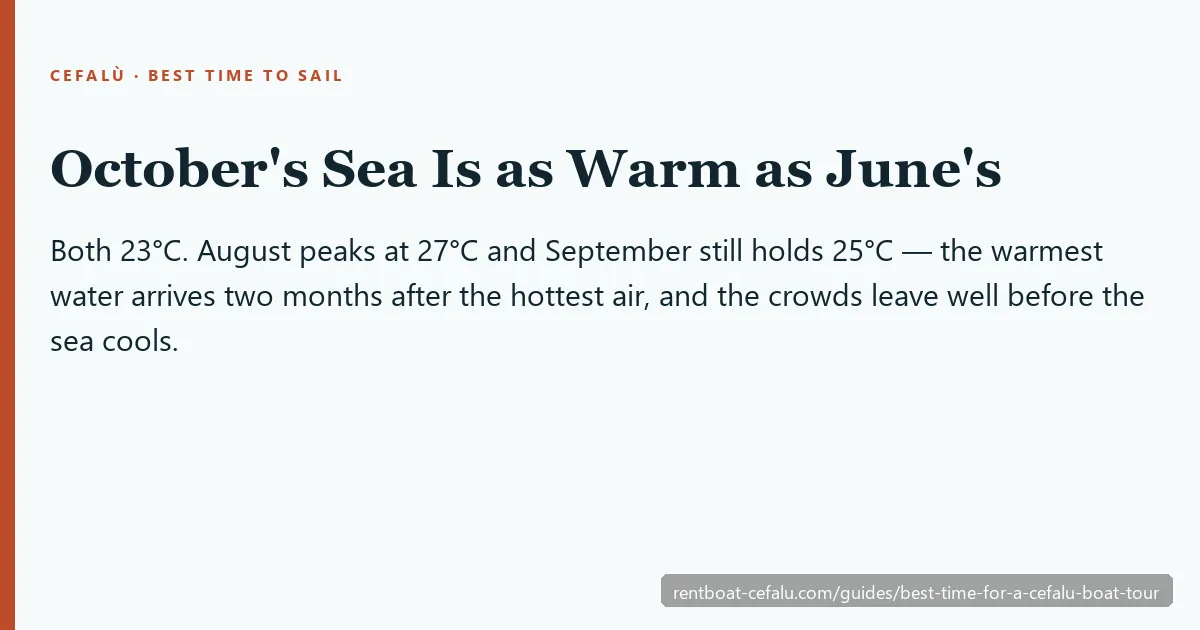
The sea is warm much later than you would guess
Air temperature and sea temperature are out of phase by about two months, and on this coast the gap works in a late visitor’s favour.
| Month | Sea temperature |
|---|---|
| May | 19°C |
| June | 23°C |
| July | 26°C |
| August | 27°C |
| September | 25°C |
| October | 23°C |
| November | 20°C |
June, the month people picture as high summer, has a cooler sea than October. The water holds its heat into autumn, so a mid-October swim stop is warmer than an early-June one, with a fraction of the company.
That single table is the strongest argument for a shoulder-season trip. You give up two degrees against August and get back the light, the space and the prices.
What each month is actually like
May. The sea is 19°C, which is swimmable for the determined and a shock for everyone else. Boats are running and half-empty, the coast is green, and a swim stop becomes a quick dip rather than half an hour in the water. Good for the coastline, thin for snorkelling.
June. 23°C water and long days — sunset around 20:30 at the solstice, the latest of the year. The bays are not yet busy in the first half of the month. This is the best balance of long daylight and manageable crowds.
July. 26°C, and the driest month of the year by a wide margin at 4 mm of rain. It is also the peak: the third week is the busiest on this coast. Book well ahead, and take a morning departure if you want a bay to yourself.
August. The warmest sea at 27°C and, on the averages, the calmest air of the year at 11 km/h. It is the best month for the water and the worst for everything else — every boat sells out, the town beach is a wall of umbrellas, and prices across Cefalù are at their highest.
September. 25°C water, which is the point. Crowds fall away sharply after the first week, the light gets noticeably better for photographs, the old town is pleasant to walk in again, and boats can often be booked a few days out. Sunset comes back to just before 19:00 by the end of the month, so evening sailings start earlier.
October. Still 23°C — warmer than June — with sunset around 18:25 mid-month. Some operators start reducing departures, and the first serious northerlies of the autumn arrive. The trade is a real chance of losing a day to weather against having the coast almost to yourself.
November to April. The sea drops from 20°C to a winter floor of 14°C in February, December brings the year’s heaviest rain at 75 mm and its strongest average winds at 17.6 km/h, and most boats stop running. Cefalù is worth visiting; a boat trip is not the reason to come.
The wind matters more than the month
Cefalù faces due north, and that is the single most useful fact about booking a boat here. A tramontana — a northerly off the Tyrrhenian — builds a swell onto this coast quickly and closes the sea for the day regardless of what the monthly averages say.
The averages do not capture it. August is the calmest month on paper and can still lose three days in a row to a blow. What happens first is that the exposed stops go: the Santa Lucia cave, whose approach is open to the north, is the first thing any skipper drops. Then the sheltered inlet at Kalura becomes the only comfortable anchorage. Then the sailing is cancelled.
Which is why the practical advice is the same in every month:
- Book early for the slot you want, and treat free cancellation as the plan rather than the fallback. Every boat here carries it up to 24 hours before departure.
- Check the forecast the day before, specifically for wind direction and not just rain.
- Keep a second day in reserve if getting on the water matters to the trip. This is the mistake that costs people their sea day — booking the last afternoon of a five-day stay.
- Operators refund in full when they cancel, and they do cancel. They are not being cautious for the sake of it.
Time of day changes more than you think
Within any month, the departure you pick changes the trip more than the date does.
Morning — clearest water, emptiest bays, flattest sea. The bays have not been stirred by a day of boat traffic and swimmers. If snorkelling is the point, book a morning sailing and accept a slightly cooler sea. The catamaran runs 09:30–12:30 and barely rolls at anchor.
Early afternoon — the warmest water of the day and the strongest light overhead, which is flat for photographs and hot on deck. The busiest departures.
Late afternoon and sunset — the best light on the limestone of La Rocca and the least time in the water, because nobody stays in once the sun is off it. Every operator’s late sailing is the first to sell out. Evening options →
Sunset moves a long way across the season: 20:30 at the solstice, 19:36 at the end of August, just before 19:00 in late September, 18:27 by mid-October. A “sunset trip” booked in October leaves in what feels like the afternoon.
Frequently Asked Questions
What is the best month for a boat tour in Cefalù?
September, for most people. The sea is 25°C against August’s 27°C, the crowds have gone, the light is better and boats are easier to book. If the warmest possible water is the priority, August; if you want long daylight without peak crowds, the first half of June.
How warm is the sea in Cefalù?
It peaks at 27°C in August and stays above 20°C from June through November: 23°C in June, 26°C in July, 25°C in September, 23°C in October and 20°C in November. It bottoms out at 14°C in February. October is warmer than June, which surprises most visitors.
Can you do a boat tour in Cefalù in October?
Yes, and the water is still 23°C. Some operators reduce their departures and the first autumn northerlies arrive, so the chance of a weather cancellation is higher than in summer. Check each listing’s own availability calendar, book with the free 24-hour cancellation, and keep a spare day.
Do boat tours run in Cefalù in winter?
Mostly not. The sea drops to 14–17°C, December brings the year’s heaviest rain at 75 mm and its strongest average winds, and the coastal excursion fleet stops. A handful of private charters may run on request in settled weather.
Will my boat trip be cancelled if it is windy?
It can be. Cefalù faces north, so a northerly builds a swell onto this coast fast. The exposed stops go first — the Santa Lucia cave before anything else — and a whole sailing can be called off. Operators refund in full when they cancel, and every boat here has free cancellation up to 24 hours before departure.
What time of day is best for a Cefalù boat trip?
Morning for clear water and empty bays, early afternoon for the warmest swim, late afternoon for the light. Morning sailings are the best choice if snorkelling is the reason you are booking; the sea is a degree or two cooler and considerably clearer.
Is it rainy in Cefalù in summer?
Barely. July averages 4 mm of rain across the whole month, the driest of the year, and August is close behind. Rain is not the thing that spoils a summer boat trip here — wind is.
Get on the Water Before the Wind Turns
Three hours along the coast, three swim stops and a Sicilian aperitivo at anchor — from $52 per person, with free cancellation up to 24 hours before you sail.
Check Availability & Book